
For many homeowners, driveway resurfacing only becomes a priority when the problems are impossible to ignore. Water begins collecting near the entrance after heavy rain. Existing tarmac starts breaking down around turning areas. Gravel spreads into grass verges and flower beds. What often looks like a simple worn surface from the road can reveal a very different picture once work begins.
Over the past month, we completed four very different projects across Dublin and Meath. Looking back at them is a useful reminder that successful resurfacing rarely follows a standard formula. Every property brings its own challenges, whether it’s drainage, access, traffic levels, or simply choosing the right material for the setting.
The finished photographs may show neat surfaces and clean edges, but the decisions behind those results were shaped by the individual requirements of each site.
Two Clondalkin Projects, Two Different Properties
Clondalkin provided two recent examples of why residential resurfacing work is rarely as straightforward as replacing an old surface with a new one.
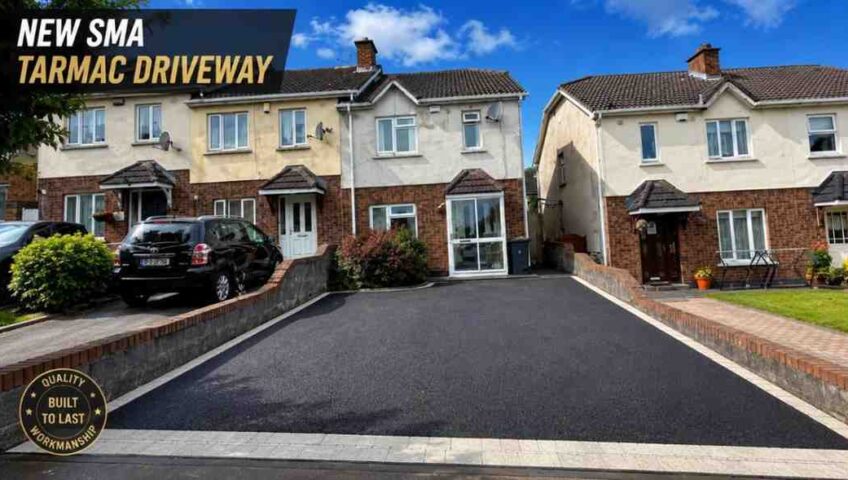
The first project, a new SMA tarmac driveway in Clondalkin, County Dublin, involved upgrading a residential entrance where the existing surface had reached the stage where patching and localised repairs no longer made practical sense. Once a driveway begins showing wear across multiple areas, homeowners often find themselves repeatedly repairing the same problems year after year.
SMA tarmac was chosen because it suited the property’s layout, daily traffic requirements, and long-term maintenance expectations. The finished result provided a clean, durable entrance that complemented the house while giving the owners a surface designed to withstand regular use.
Only a short distance away, another SMA tarmac driveway project in Clondalkin highlighted something homeowners often overlook. Much of a driveway’s lifespan depends on work that disappears once the project is complete. Surface finishes naturally attract attention, but preparation, levels, edge retention, and drainage considerations have a far greater influence on how that surface performs five or ten years down the line.
Although both Clondalkin projects finished with SMA tarmac, the properties themselves were different. The approach to each site reflected those differences rather than applying the same specification regardless of conditions.
Why Rural Properties Often Tell a Different Story
Drive a short distance out into Meath and the conversation changes.
Many rural properties have longer entrances, larger plots, and very different traffic patterns compared with suburban homes. Access roads may stretch hundreds of metres from gate to house. Delivery vehicles, agricultural traffic, and heavier day-to-day use place different demands on the surface.
A recent gravel driveway project in Ashbourne, Meath is a good example.
For some properties, gravel remains one of the most practical solutions available. While discussions around driveway resurfacing often focus on tarmac or resin, gravel continues to perform exceptionally well when installed correctly and matched to the right setting.
In Ashbourne, the character of the property and the nature of the entrance made gravel a sensible choice. It sits comfortably within rural surroundings, offers flexibility over larger areas, and can provide excellent drainage characteristics when the underlying structure is properly prepared.
Many homeowners assume that upgrading automatically means replacing gravel with a hard surface. In reality, some country properties function better with gravel than they would with more expensive alternatives.
What Recent Work in Kells Revealed About SMA Tarmac
The fourth project, a new SMA tarmac driveway in Kells, Meath, reinforced why SMA continues to be one of the most requested surfaces across Leinster.
Larger residential properties often face challenges that don’t exist on smaller suburban sites. Longer entrances, multiple vehicles, delivery traffic, and exposure to changing weather conditions all influence performance over time.
These are the types of properties where homeowners often arrive at resurfacing after years of gradual deterioration rather than a sudden failure. Small cracks become larger ones. Water begins collecting in low spots. Edges soften. Surfaces that once looked perfectly serviceable slowly become harder to maintain.
The Kells project reflected a pattern seen regularly across rural Meath, Kildare, and Wicklow. Homeowners increasingly want a surface that balances appearance with durability. SMA tarmac continues to appeal because it delivers both without requiring extensive ongoing maintenance.
What Four Recent Projects Tell Us About Driveway Resurfacing in Ireland
One interesting observation from these projects is how often material choice is driven by the property itself rather than homeowner preference alone.
The Clondalkin projects suited SMA tarmac because of their residential layouts and usage patterns. The Ashbourne property suited gravel because of its setting and practical requirements. The Kells project benefited from the durability and finish associated with SMA tarmac.
The same material is not automatically the best choice for every entrance.
Properties in suburban Dublin often have different priorities from country homes in Meath. A family driveway serving several vehicles every day presents different demands from a long rural access road. Drainage concerns vary from site to site. Ground conditions vary. Existing foundations vary.
Recent projects consistently reinforce one lesson: understanding the property comes first, and selecting materials comes second.
Frequently Asked Questions About Driveway Resurfacing Ireland
How do I know when resurfacing is better than repairing?
Many homeowners continue patching small areas for years. Once problems begin appearing across multiple sections of the entrance, resurfacing often becomes the more practical and cost-effective solution. Several of our recent projects started after owners realised recurring repairs were no longer addressing the underlying issues.
Why is SMA tarmac so popular for residential driveways?
Across recent projects in Clondalkin and Kells, homeowners were looking for a surface that combined durability with a clean appearance. SMA tarmac continues to be a popular choice because it performs well under regular vehicle traffic while remaining relatively straightforward to maintain.
Are gravel driveways still a good option?
Absolutely. The recent Ashbourne project is a good example of where gravel remained the most suitable solution. On many rural properties, gravel complements the setting naturally and can perform extremely well when properly installed.
Does every driveway need the same level of preparation?
No. Every site is different. Existing foundations, drainage conditions, traffic levels, and property layout all influence the work required before resurfacing begins.
Are rural driveways different from suburban driveways?
In many cases, yes. Rural entrances are often longer, exposed to heavier traffic, and subject to different drainage conditions. These factors can influence both material choice and construction methods.
Looking across these four projects, what stands out is not the surface itself but the variety of conditions involved. Two homes in Clondalkin required SMA tarmac solutions. A rural property in Ashbourne suited gravel. A larger residential entrance in Kells benefited from a new SMA surface designed for everyday use.
None of the projects followed exactly the same route because none of the properties were exactly the same.
That remains one of the most important lessons from driveway resurfacing in Ireland. Successful results rarely come from choosing a material first. They come from understanding how the entrance functions, how water moves across the site, how the property is used, and what will perform best over time in that particular location.
For homeowners planning improvements, looking at similar completed projects is often the best place to start.